Wanderer above the Sea of Fog
Wanderlust

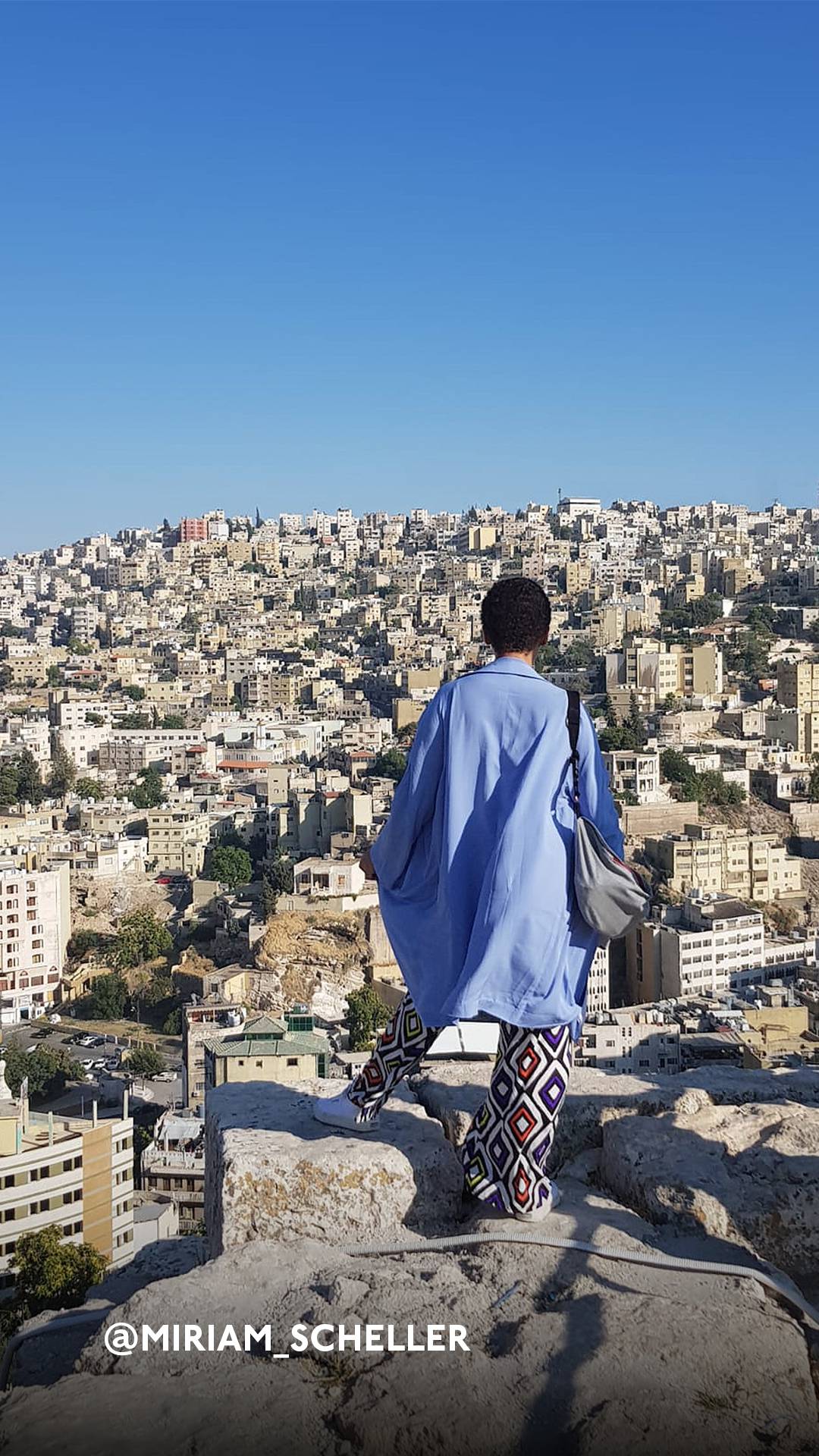

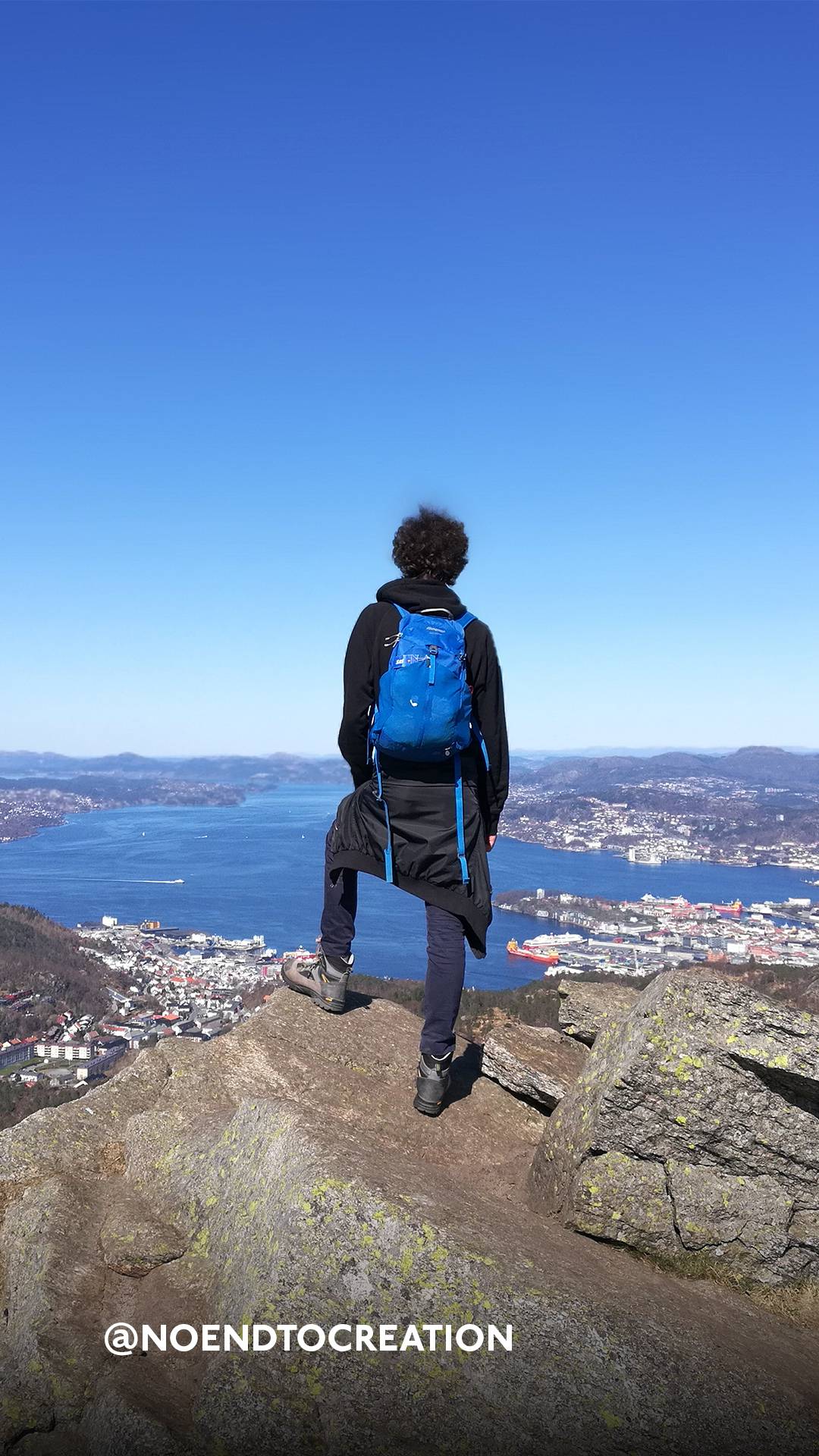
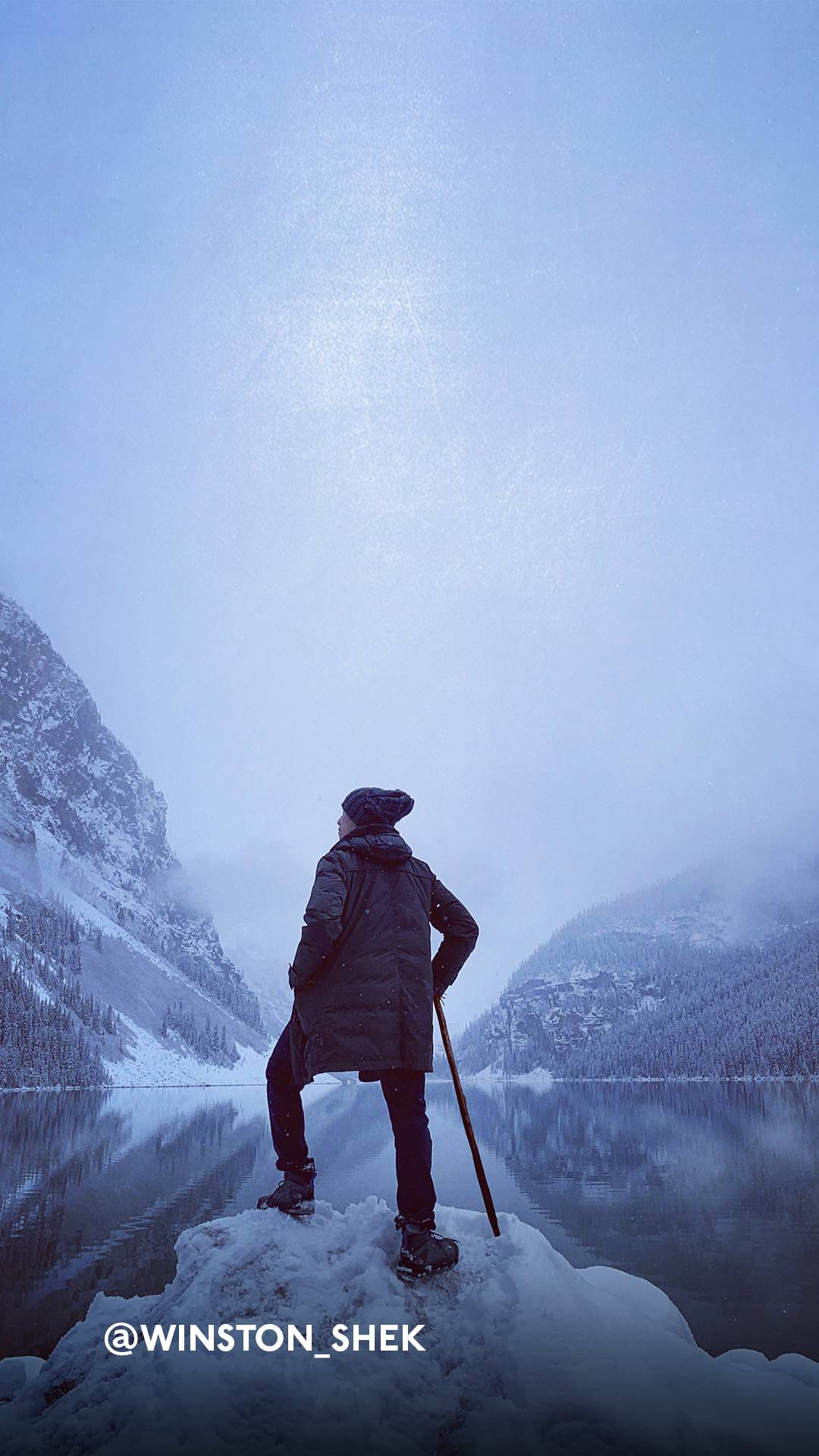
1
Departure
Alone on the Summit,
Gazing into the Distance
Only a few more steps to go – the perfect photo opportunity is just within reach!
The wind caresses your face. You’re bursting with pride to have made it to the top. You drink in the view, which stirs a deep yearning within you as you wonder what lies beneath this blanket of fog …
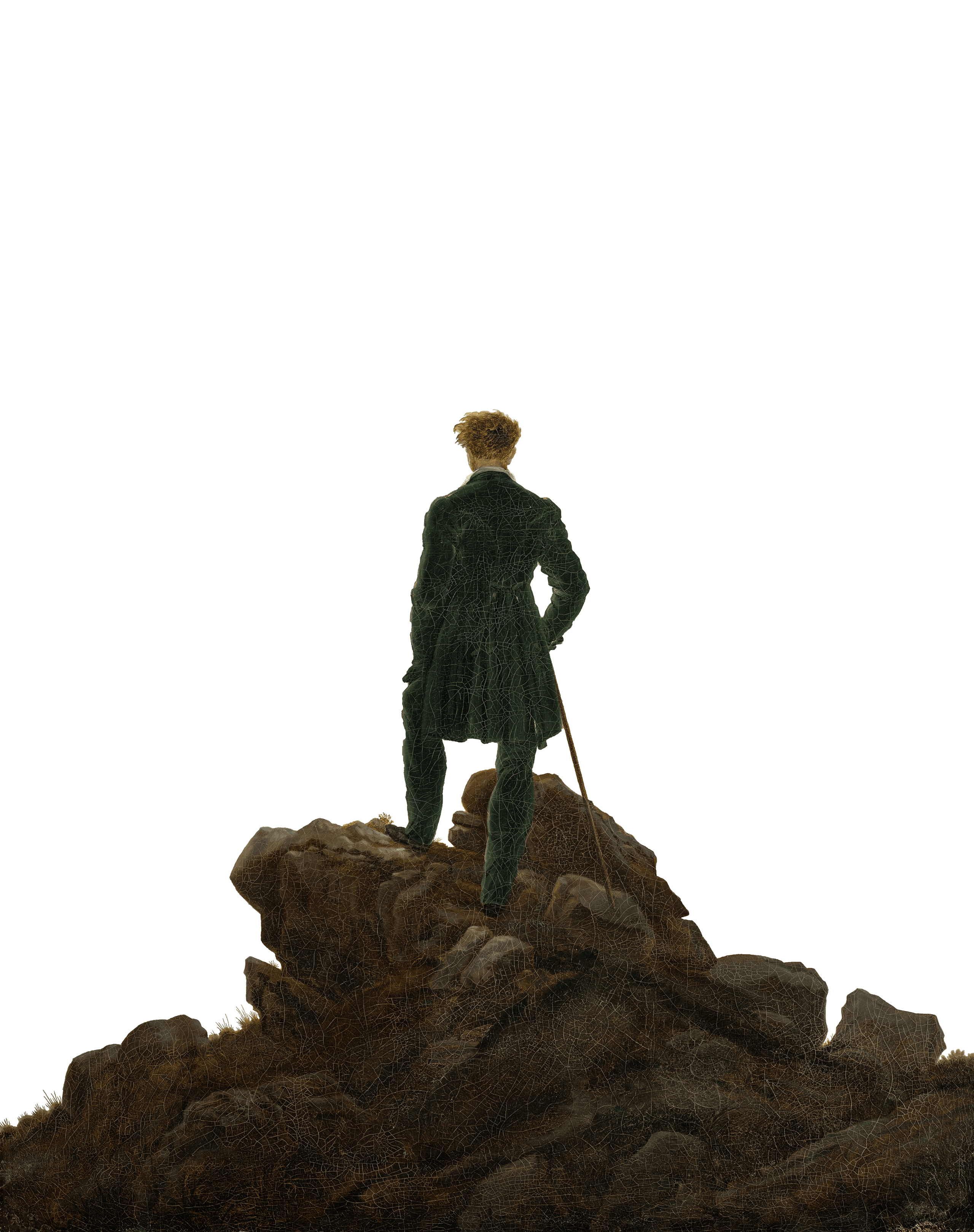
In the painting Wanderer above the Sea of Fog, all these experiences come together. It is one of the most-referenced works of art ever made. A visual template for tens of thousands of travel photos. The artist Caspar David Friedrich painted it around 1817.
The painter himself was also regularly seized by wanderlust, describing the feeling like this:
Quickly I hurried through the streets,
to come to green pastures,
where the air is freer and purer,
and one is filled with a sense of joy.
Excerpt from a letter from Friedrich to his brother Heinrich and his friend Joachim Praefke, undated, sometime around 1803 (only available in German)
We can still feel Friedrich’s enthusiasm and sense of joyful anticipation today. But the world of travel was different 200 years ago – it would still take a few more decades for trains and steamships to appear, and airplanes were still a pipedream.
When the painter moved to Dresden around 1800, he often explored the surrounding area on foot. He sometimes afforded himself a trip by horse-drawn carriage to the Elbe Sandstone Mountains. The area is also known as “Saxon Switzerland” and lies on the border of Saxony and the Czech Republic.
Friedrich went with the times – spending time in nature and hiking became a fashionable leisure activity around 1800. However, there was one travel fad that the painter notably did not go in for: he never traveled to Italy, although this country was the universally acclaimed must-see destination for most of his fellow artists.
As a pastime, tourism quickly grew and benefited from developments in the world of industry. In 1839, Saxon Switzerland was accessible for the first time by steamboat from Dresden, a service that is still in operation today. We don’t know whether Friedrich ever took it. At least after his first stroke in 1835, he stopped traveling.
2 Traveling Into the Unknown
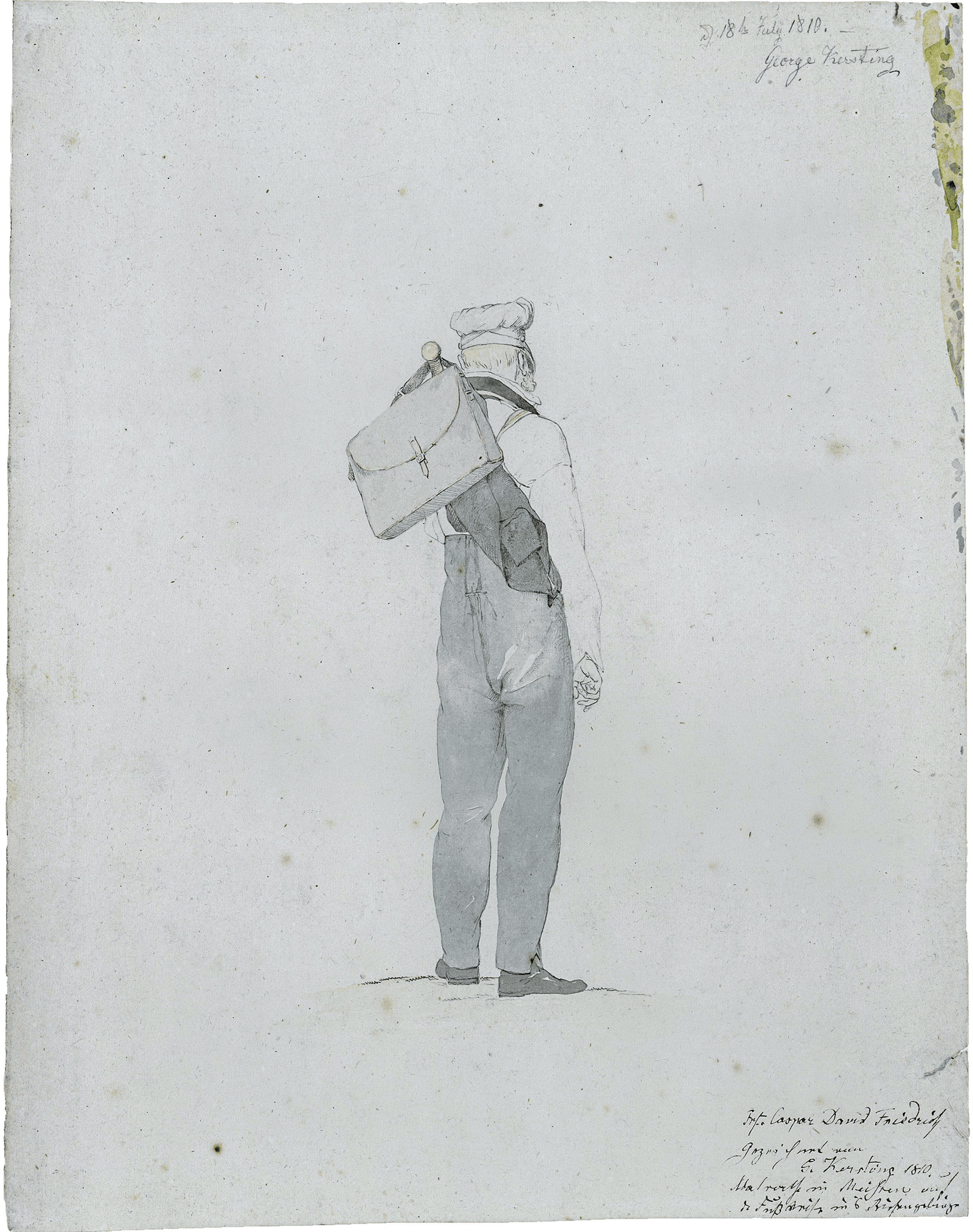
Friedrich would go on walking tours on his own or sometimes take just one or two friends with him. He regularly trekked with his friend, the painter Georg Friedrich Kersting. In 1810, they embarked on a “journey by foot to the Giant Mountains” (Riesengebirge) in what is now the Czech Republic – Kersting noted this on the bottom right of this drawing.
On these excursions, Friedrich primarily sought artistic inspiration. He greatly admired the natural world, its forces, and its beauty, studying its forms down to the smallest detail. In doing so, he also saw the great and universal in the small. As a devout Christian, Friedrich likewise wanted to come closer to divine creation through hiking and to experience his faith anew.
“Wandering” or “rambling” was particularly widespread in intellectual circles in Europe – for example, among the Romantics. Their age was characterized by political upheaval, the onset of industrialization, and Enlightenment ideas, which called on the male, *white* individual to think freely. Through wandering, the Romantics sought to return to nature, to the sensual and the emotional. Obtaining a distance from the everyday socialized self was important for them in order to gain new experiences. This is reflected in Friedrich’s art, which is why his works are often considered the epitome of German Romanticism today.
In Friedrich’s age, encountering nature in all its majesty was high on the list of travel motivations. Hiking tourism saw a veritable boom. The goal was to reach the limits of experience – to be confronted with the sublime.
Immeasurably large, overwhelming, threatening – these are the kinds of extreme feelings that might arise when faced with a view from the summit. When hiking, you may feel overwhelmed, small, and powerless in the face of nature. Put a foot wrong and you might slip over the edge. And yet exposing yourself to such a moment is life-affirming, thrilling. That’s when the feeling of “delightful horror” sets in.
According to the philosopher Immanuel Kant, the sublime sees humankind glimpsing its “superiority” over nature through reason and independent thought. You can only enjoy the view in the knowledge that nothing can happen to you from your vantage point. That’s why Friedrich’s Wanderer is shown in a confident pose in the painting.
On his wanderings, Friedrich must have experienced this feeling of the sublime – and transferred it to his picture.
3 In Nature Capturing Details
Have you maybe also experienced a sublime sight on one of your trips – and were then disappointed when it didn’t come out in the photos you took?
To get around this problem, Friedrich preferred to concentrate on the details. He didn’t even try to artistically capture the big picture, the sublime. Photography didn’t exist, so instead he drew. When he found a subject that interested him, he would sit down – perhaps on a tree stump. He observed closely, drew meticulously, exploring shrubs, rocks, and mountain ranges with fine lines.
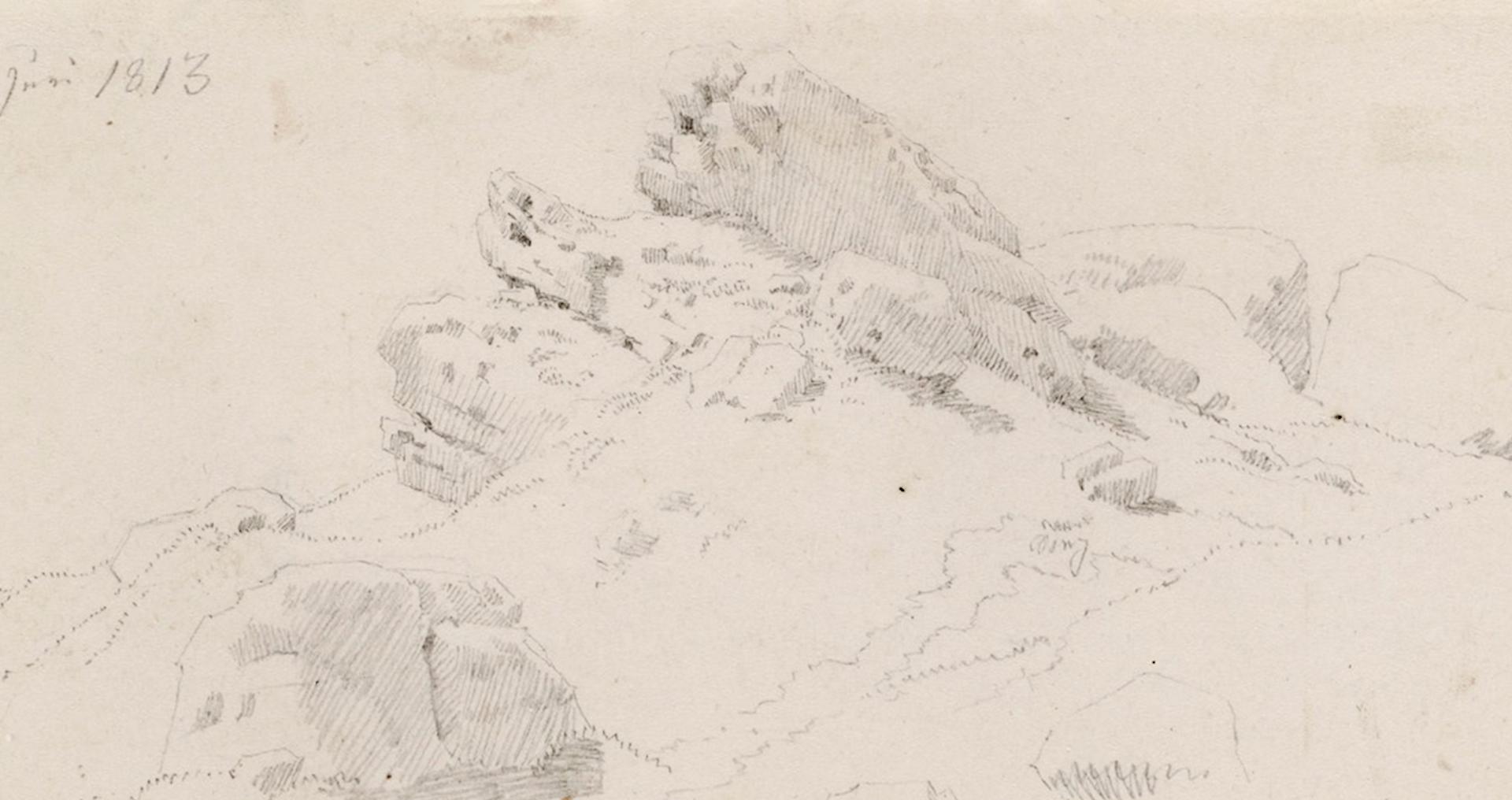
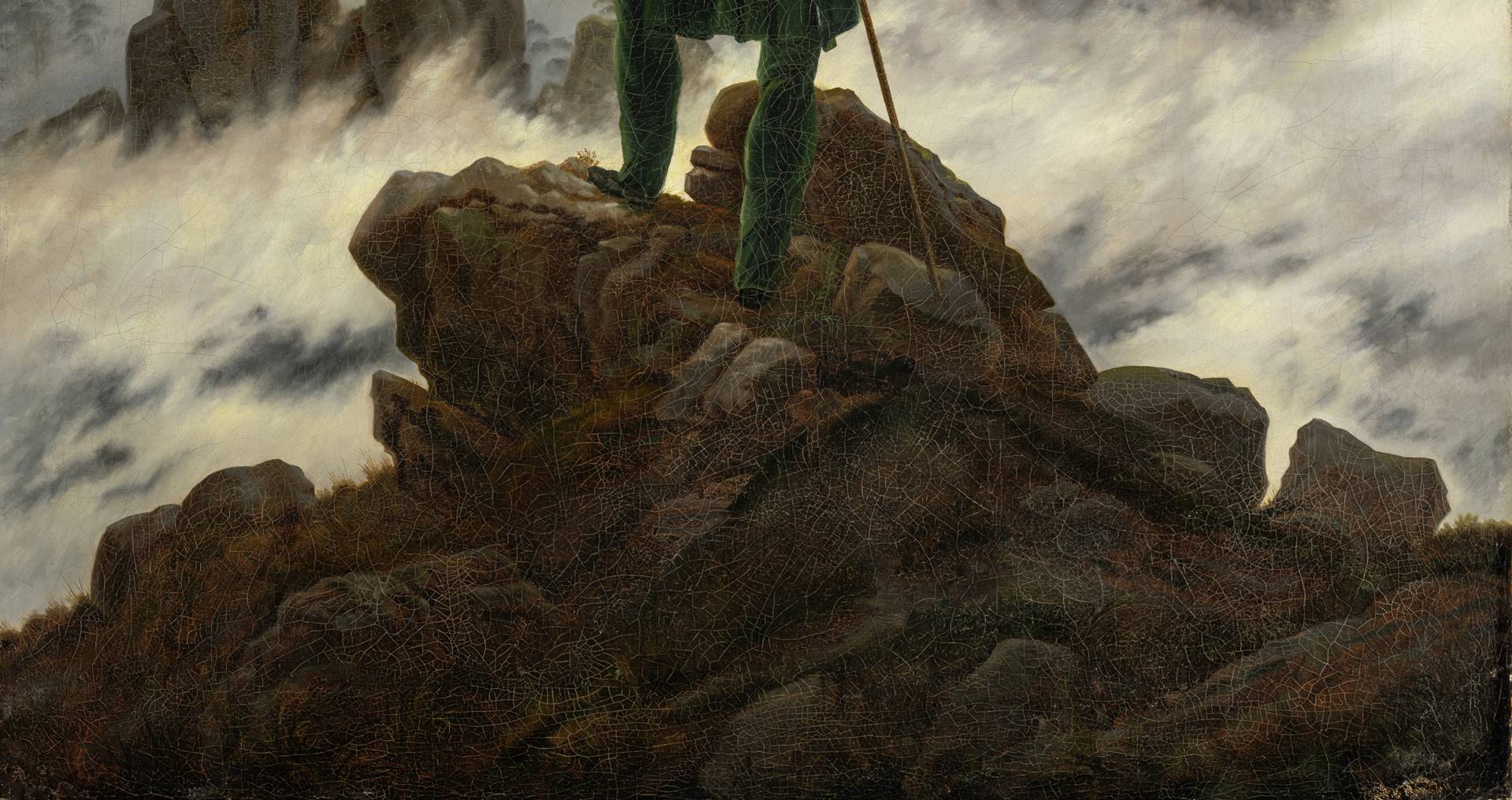
Juxtaposition of detail from the painting and the drawing.
Caspar David Friedrich, Rocky Hilltop, June 3, 1813, Drawing, 11,1 x 18,6 cm, Kupferstich-Kabinett, Staatliche Kunstsammlungen Dresden
Later, in his studio, Friedrich assembled these individual nature studies into a new composition. He described his working process as follows:
Close your physical eye, so that you may see your picture
first with the spiritual eye.
Then bring what you saw in the dark into the light,
so that it may have an effect on others, shining inwards from outside.
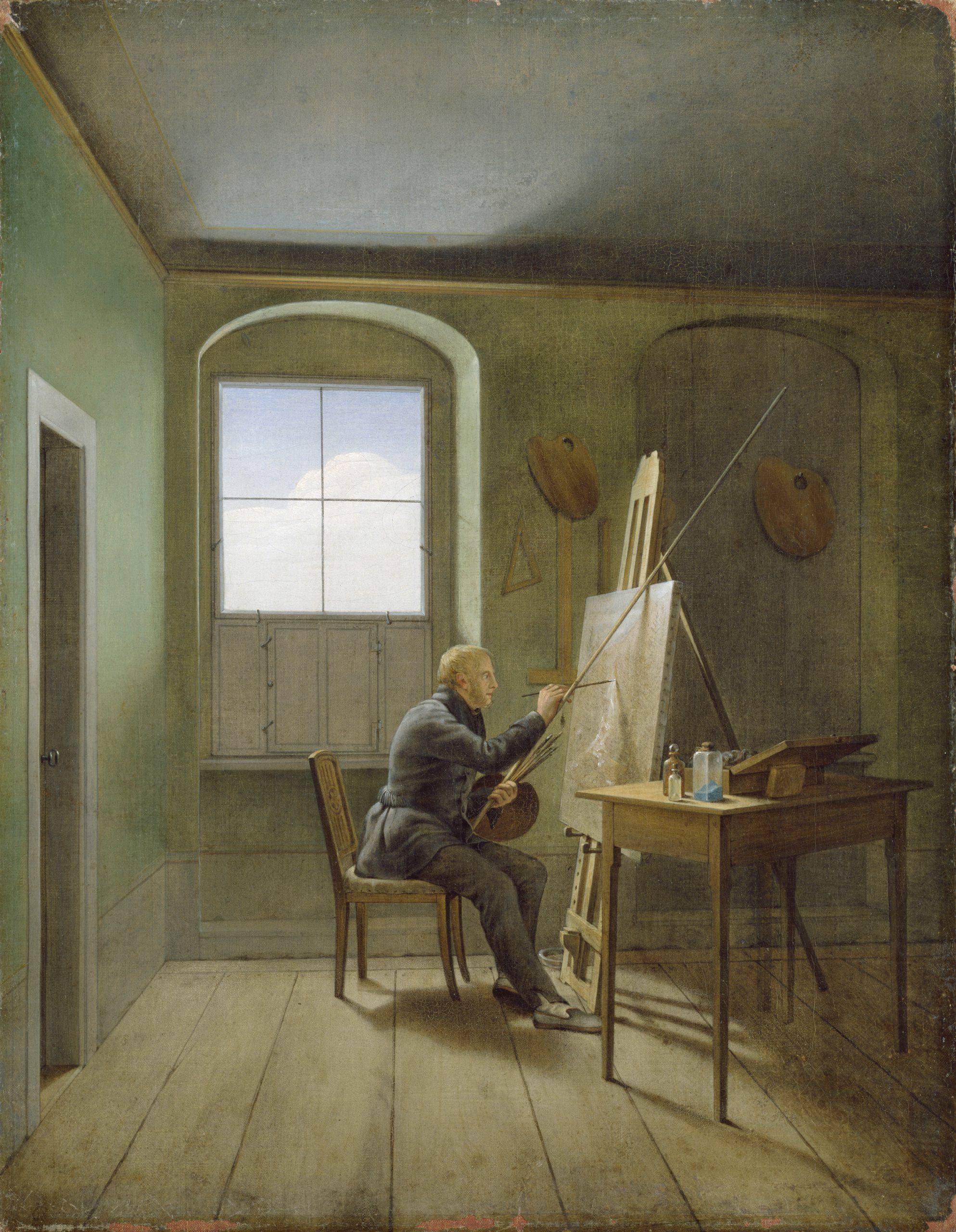
Only when Friedrich had his picture exactly in mind, did he begin to paint. He often assembled different drawings from his travels and created something altogether new – a kind of Photoshop in his head.
Hidden in the Wanderer are many of the nature drawings Friedrich made in the Elbe Sandstone Mountains. Today, art historians can still determine quite precisely where he made certain drawings.
Because the individual elements of the landscape are reassembled, or composed, it is also called a composite landscape.
But taken as a whole, however, this landscape doesn’t exist in reality.
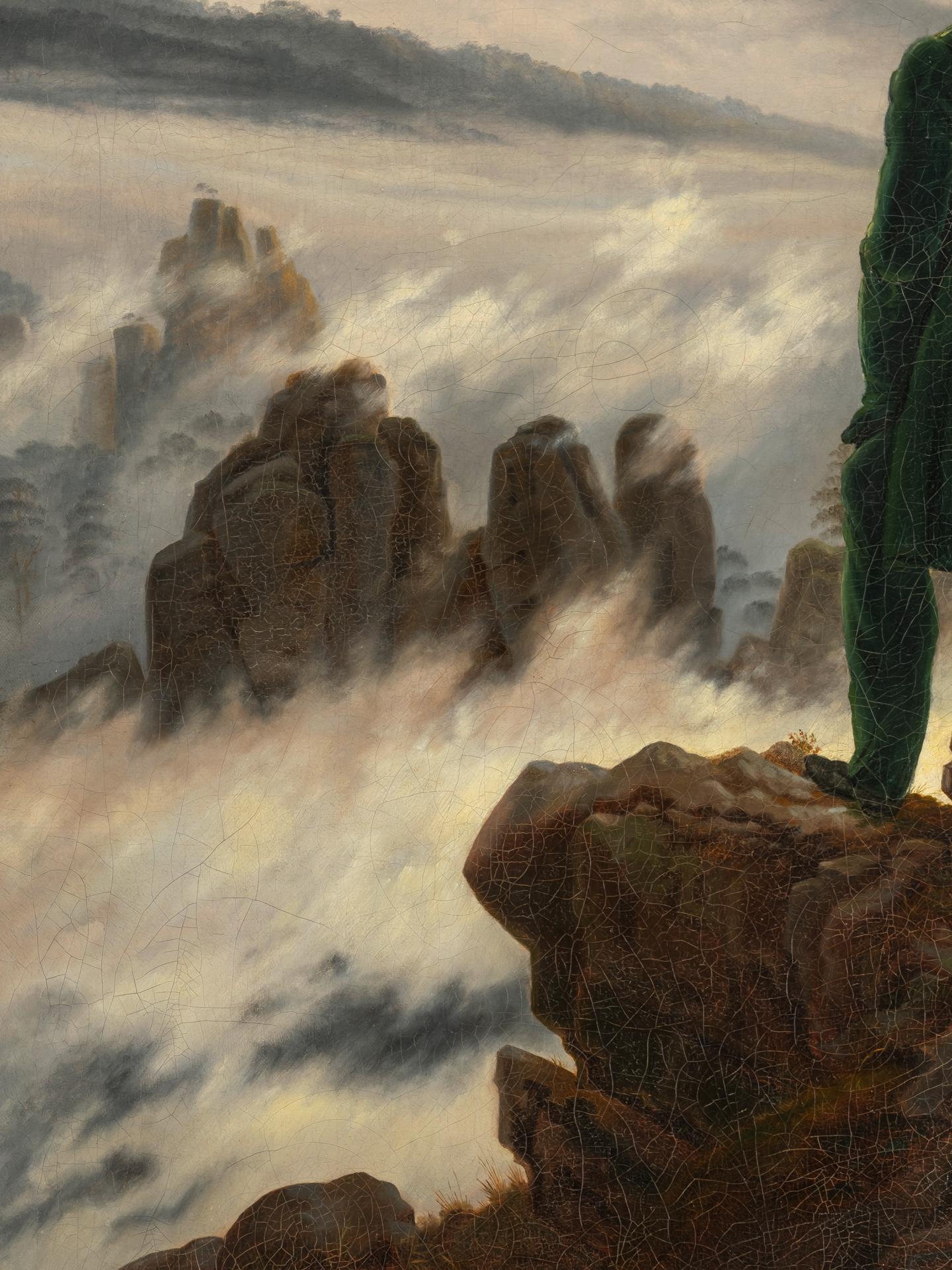
Caspar David Friedrich, detail from the painting “Wanderer above the Sea of Fog”
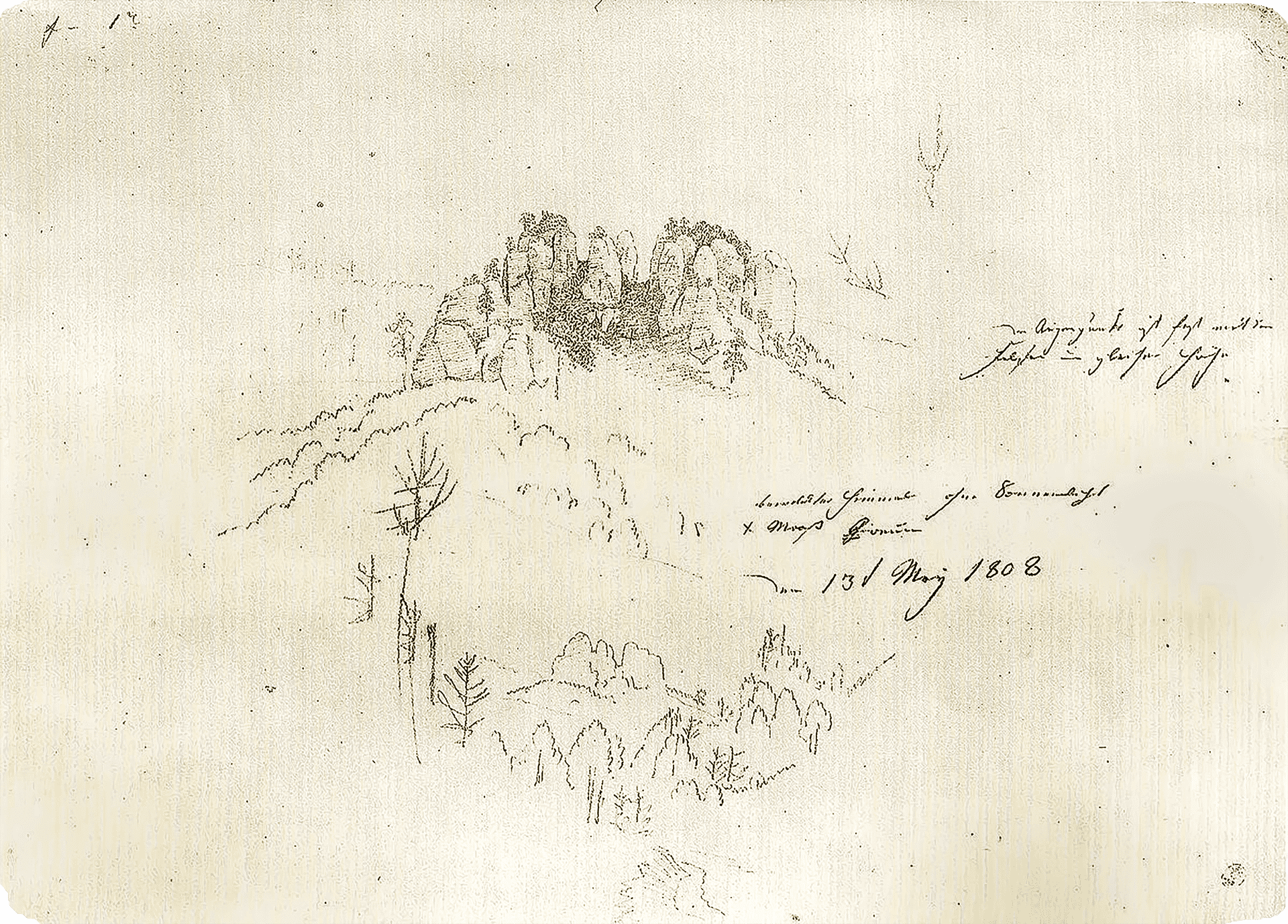
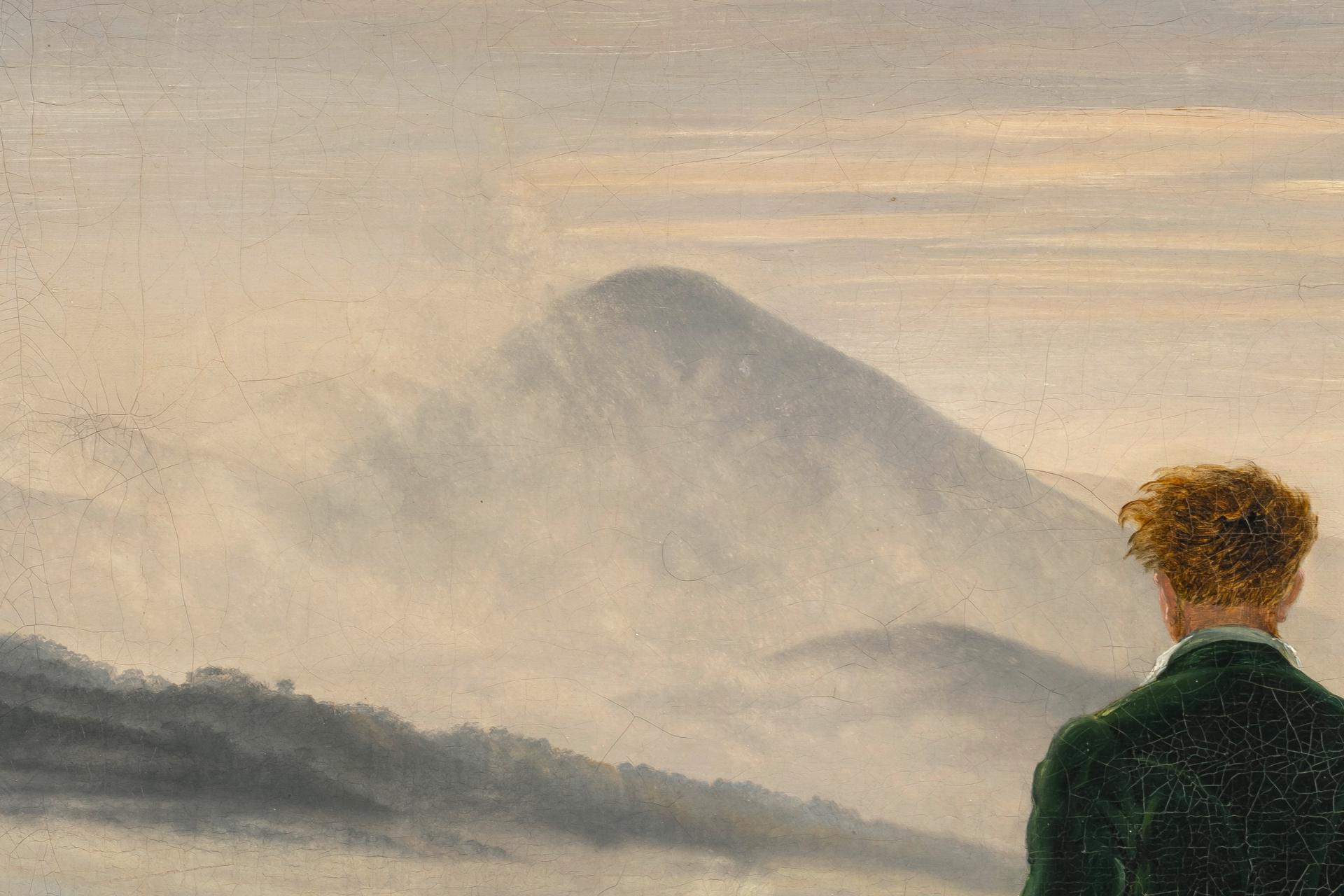
Caspar David Friedrich, detail from the painting “Wanderer above the Sea of Fog”
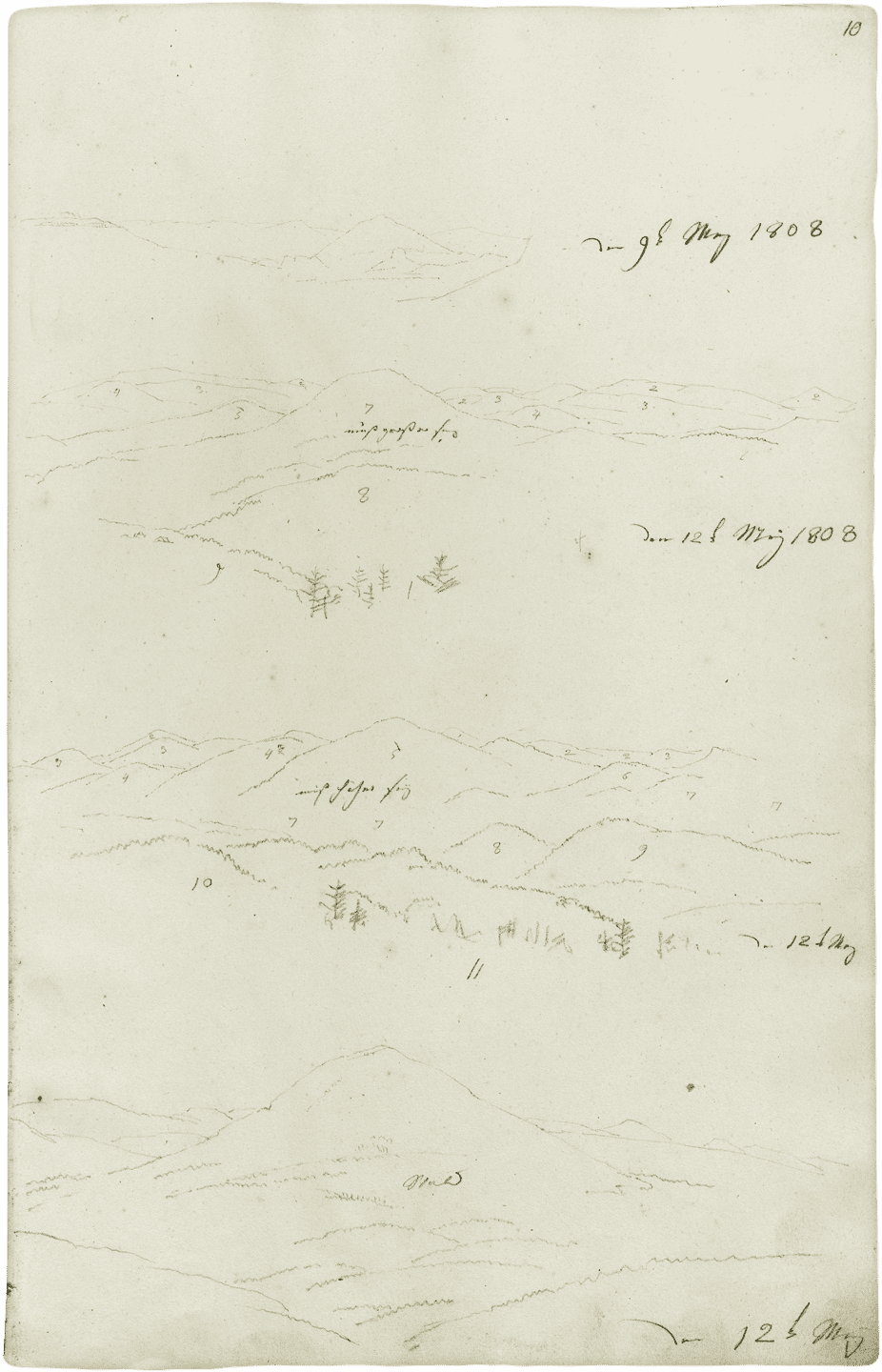
Maybe this is precisely what is so fascinating about Friedrich’s works today: the relationship between his observations, his ideas, and what he ultimately creates from them as a picture. A new image, composed of many smaller ones pieced together – this is something we know from today’s visual culture (just think of AI-generated imagery and deepfakes) …
4 In The Studio I A Picture Takes Shape
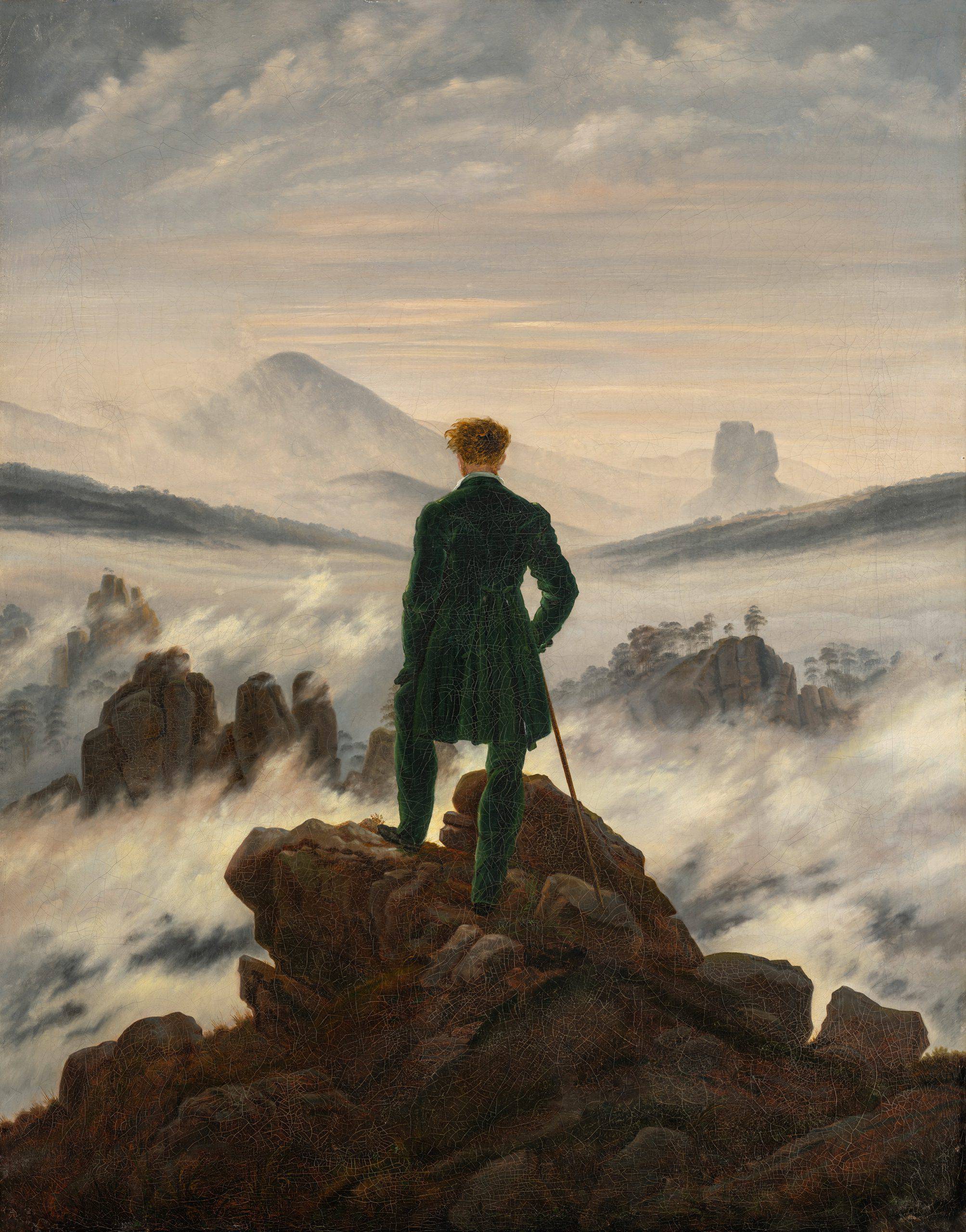
How does a good picture work? How must it be composed? In his pictures, Friedrich used design principles that were intended to make them appear particularly harmonious. Today, the grid display in the viewfinder of our digital camera draws on the same rules.
These include the “golden ratio”, a precisely calculated aspect ratio: a ÷ b = (a + b) ÷ a
5
In The Studio II
The Trick with the
“Rear-View Figure”
The Wanderer is at the center. Art historians have been speculating about the man’s identity for decades. Until today, it is not known what his mission is or who he is.
Friedrich deliberately leaves any details about the figure open; perhaps he is simply a hiker taking in the sublime view. Perhaps he is a deceased friend, making the picture serve a commemorative function. Friedrich does give one hint – the hiker’s green coat could refer to a forester. Perhaps the heroic pose also points to a German fighter against the French occupation at the time of Napoleon? Was Friedrich thus expressing his support for the German liberation movement in the 1810s?
This ambiguity of the unidentified figure seen from behind is one of the great visual tricks explaining why the picture is still so successful today: it remains mysterious.
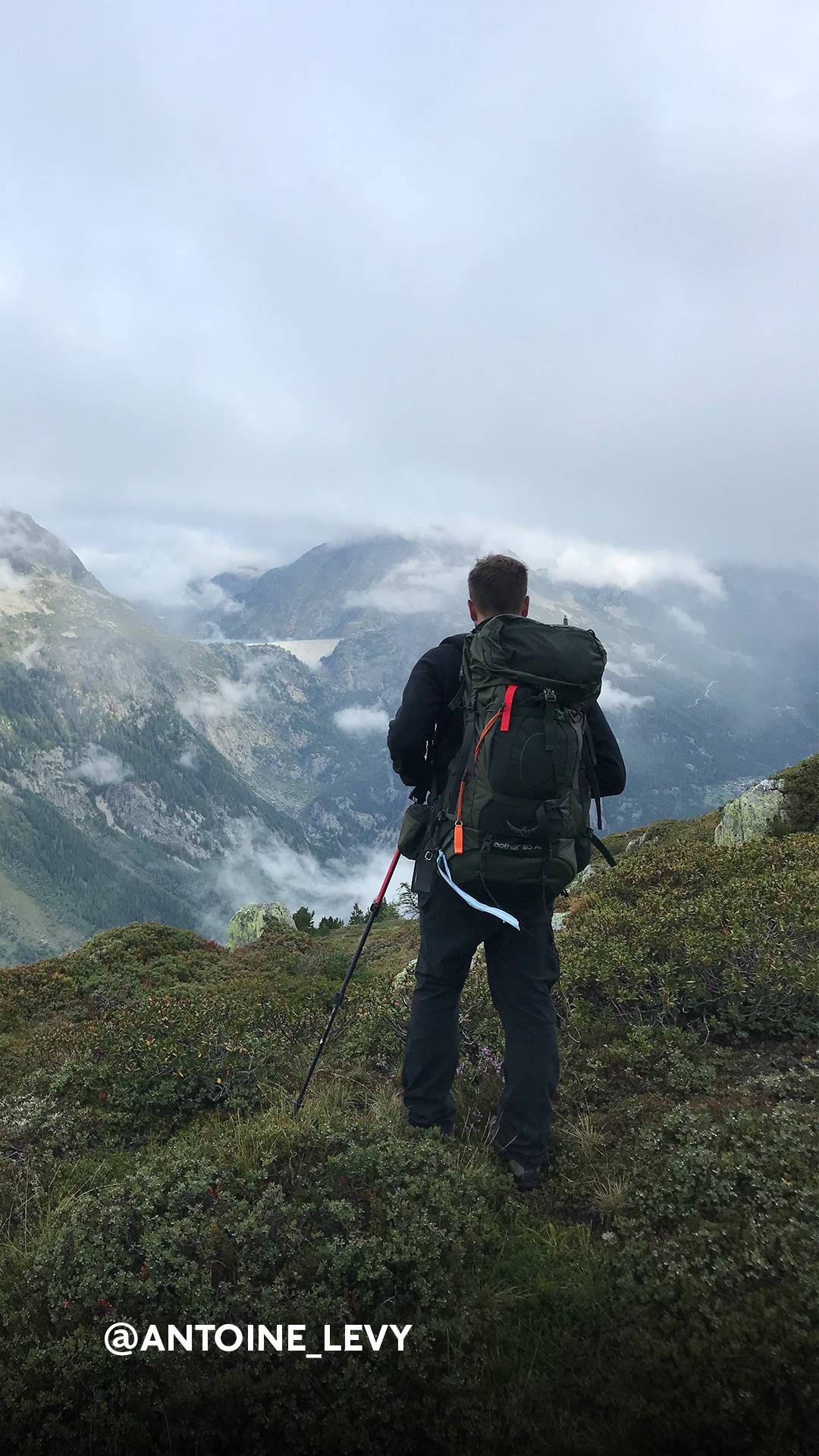
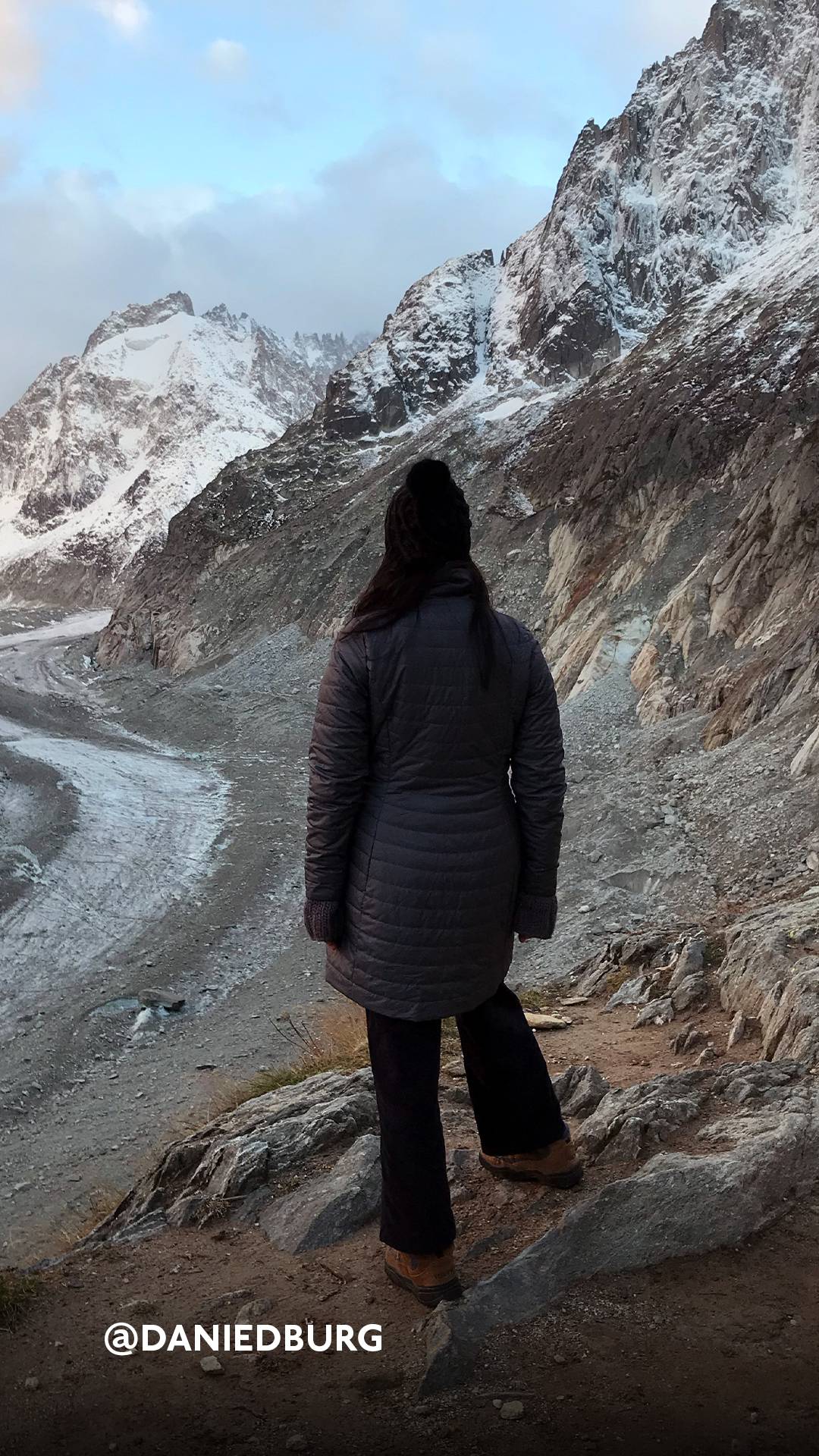
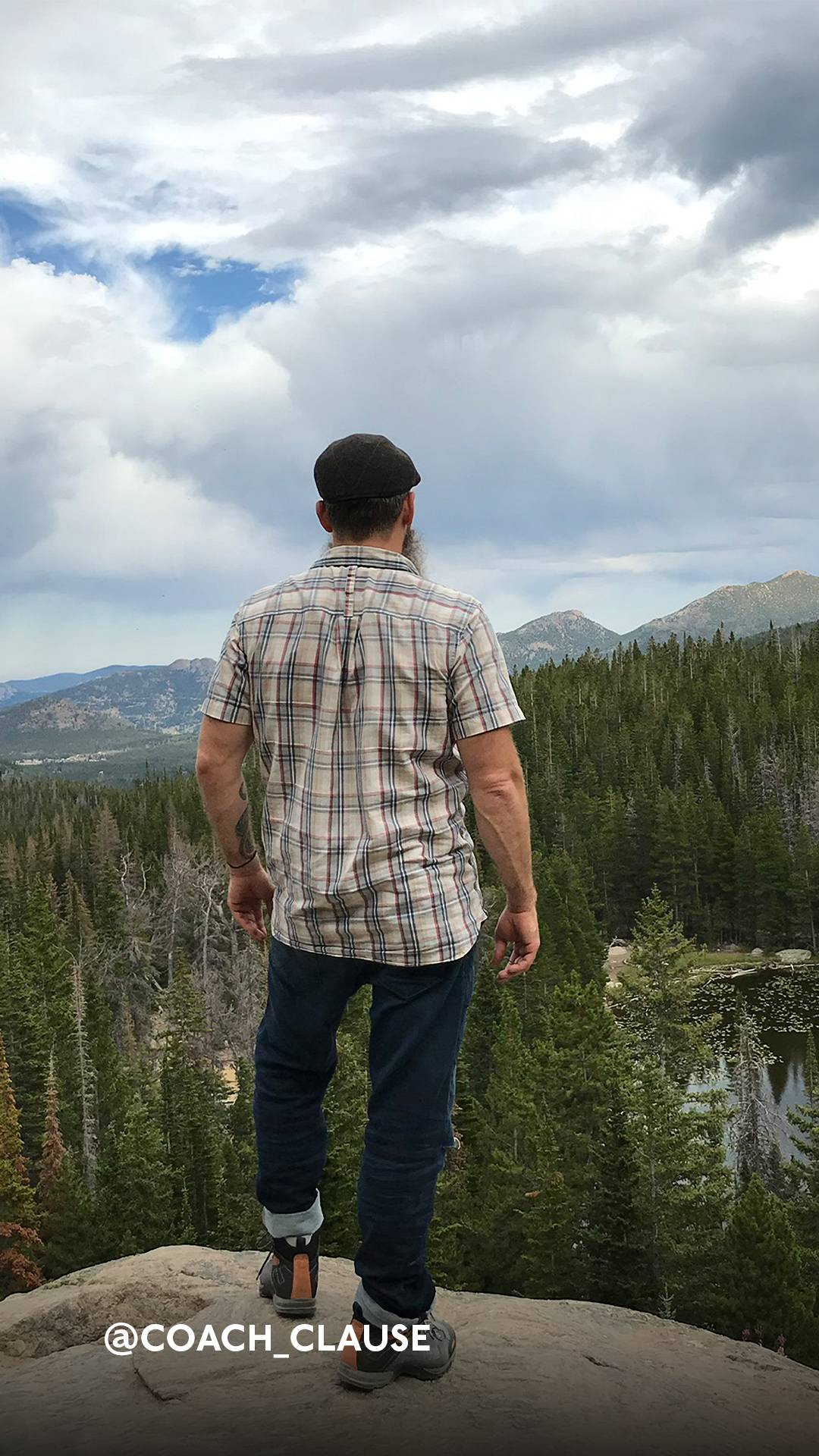
The view from behind also arouses a sense of longing. We can put ourselves in the subject’s place and even assume its place in our own photos. And, when looking at those photos at a later date, we remember standing there and commanding the same view.
Today, some people would argue
that the “rear-view figure” isn’t actually that universal.
The image potentially excludes non-white, non-male identities and all those who cannot easily climb a mountain.
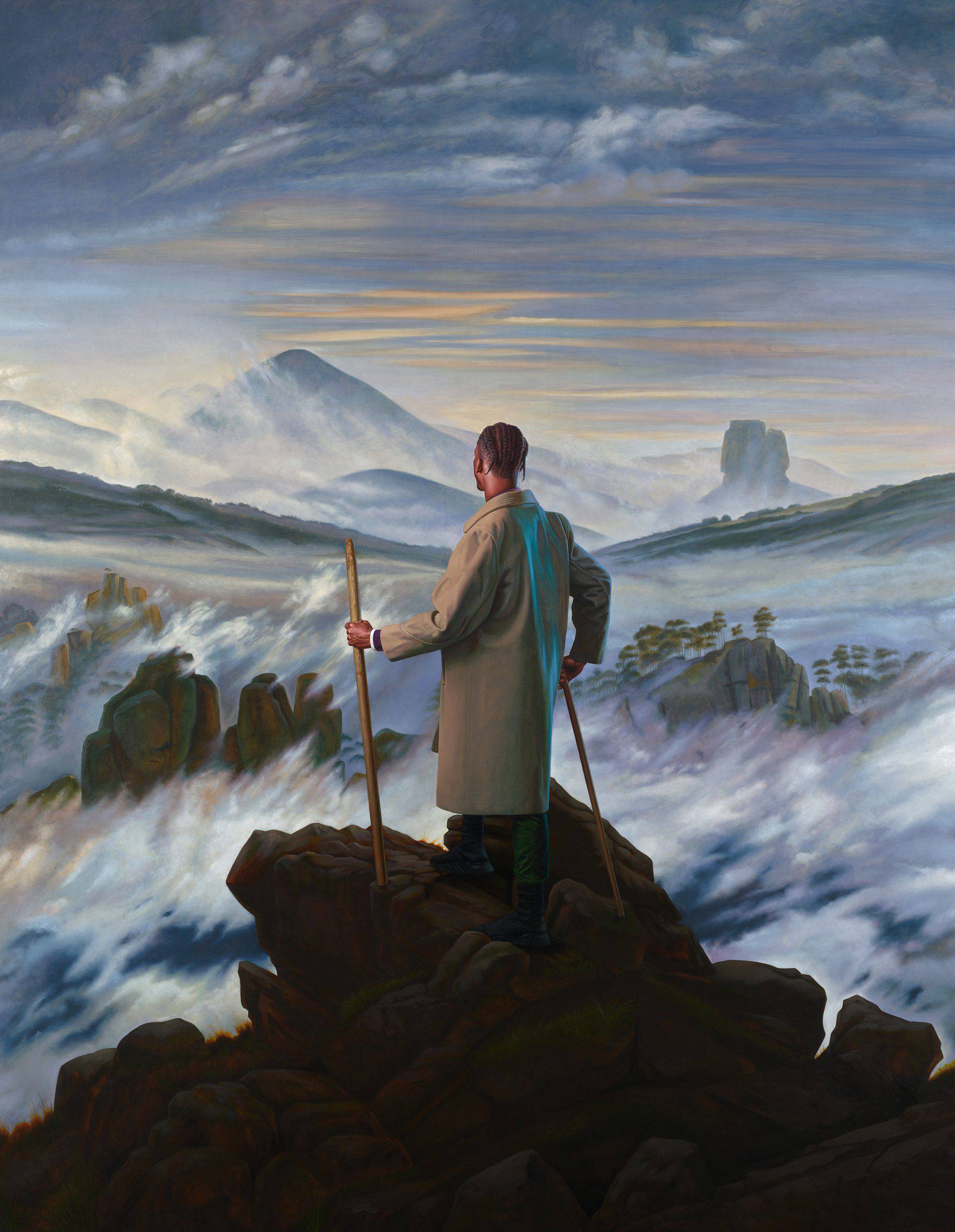
The American artist Kehinde Wiley engages with this problem. He adopts Friedrich’s image almost exactly – although his wanderer is Black, and wears contemporary attire. Wiley’s painting is also monumentally large, larger than a baroque portrait of a ruler. That’s also a political statement!
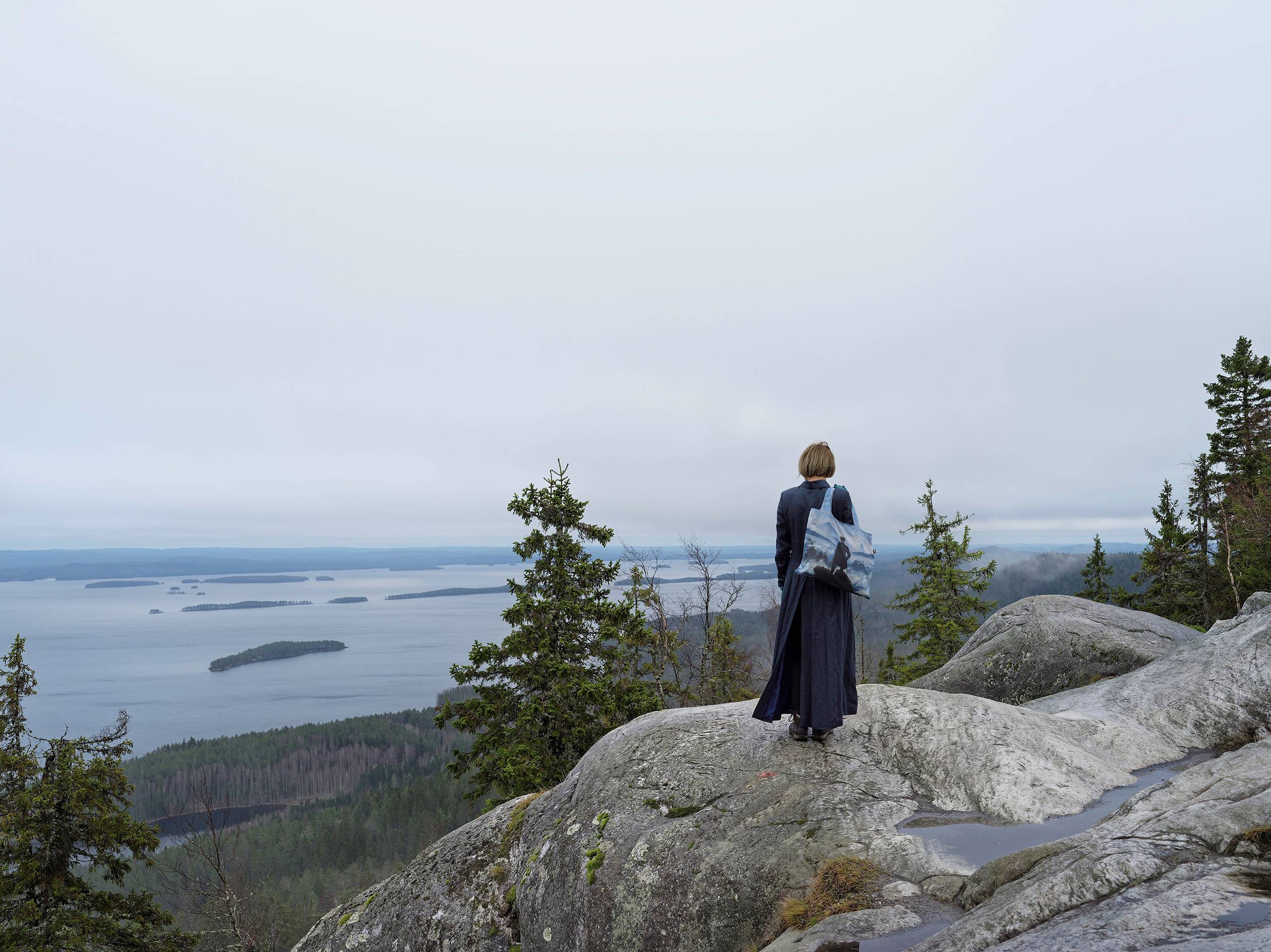
During the COVID-19 pandemic, Finnish artist Elina Brotherus – like many others – often spent time outdoors. That’s when she created this artwork, in which she stands on a rock in the Wanderer’s pose, a Wanderer’s bag across her shoulder. The world is a different place today – and Friedrich’s Wanderer has entered pop culture.
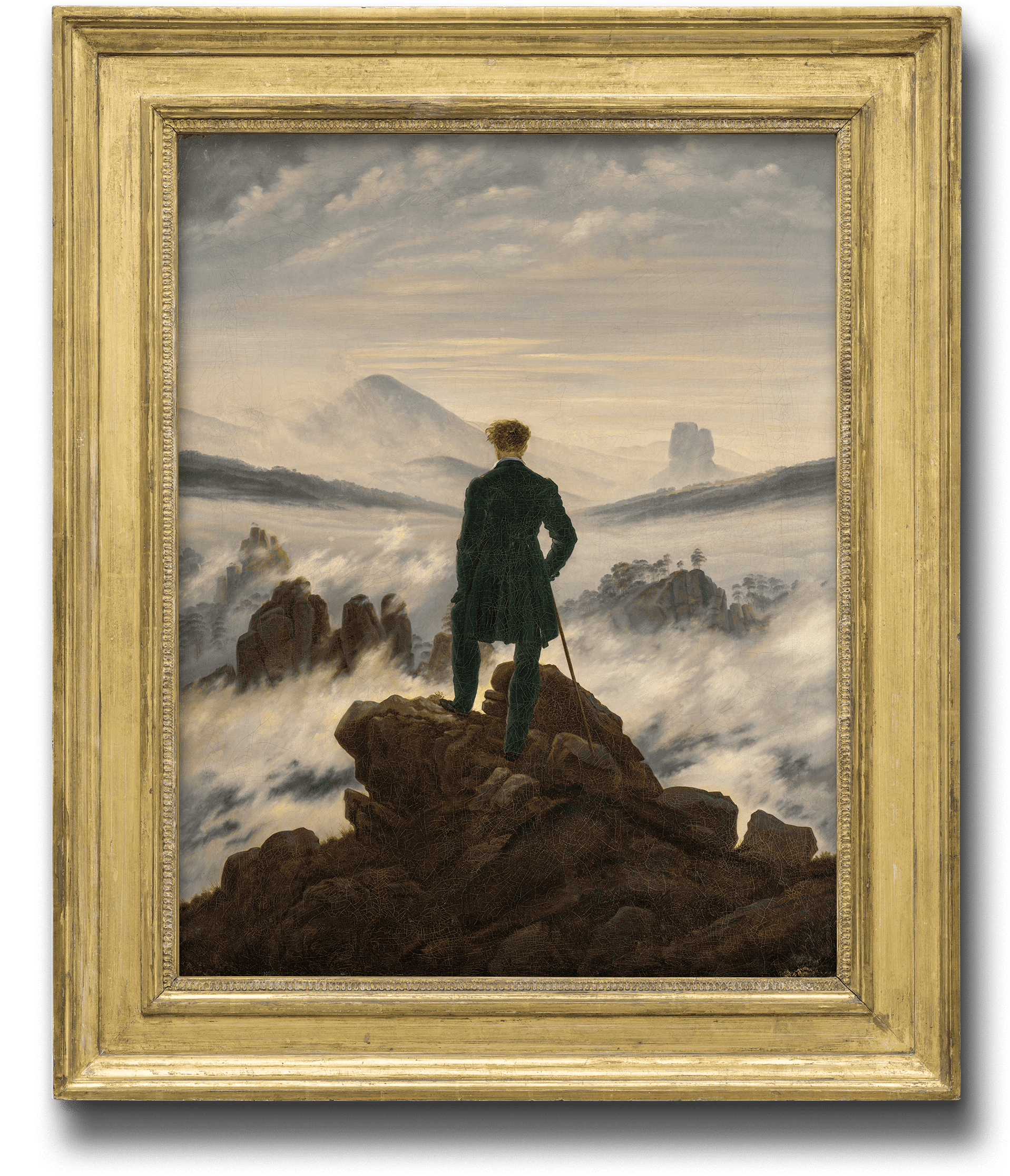
Having reached the summit, the wanderer gazes into the wide expanse. Every journey has the power to change our perspective. We look differently at our everyday life, at ourselves.
If you gaze into the distance now:
What do you see?